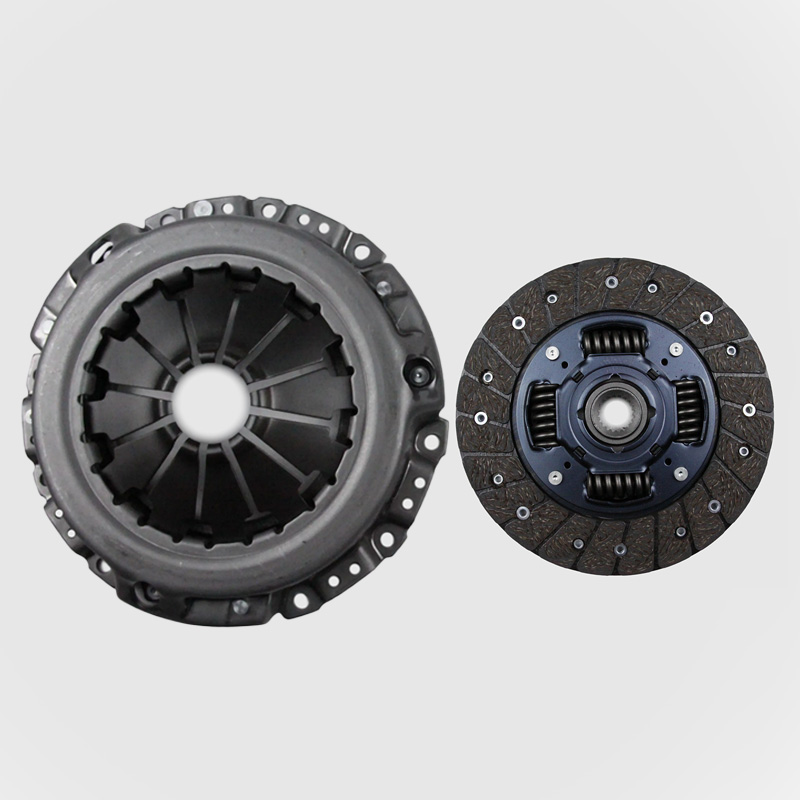
ATTENTION! Three drive habits may hurt your clutch! How to avoid them?( With profession solutions)
Clutch is a key component of manual and partially automatic vehicles, but many owners and drivers unintentionally adopt some clutch-harming habits during driving, leading to early wear and tear and even failure. This article will reveal the 3 most clutch-damaging driving habits, analyze their dangers from a technical point of view, and provide professional solutions to help extend clutch life and reduce repair costs.
I. Half Clutch Hill Climbing - High Temperature Accelerates Wear
(I) Problem Analysis
Many drivers half linkage (half clutch) when starting up a steep hill or climbing a hill at low speeds, thinking that this will give them better control of the vehicle speed. However, this operation leads to:
- Continuous slipping of the friction plates, generating high temperatures (up to 300°C or more).
- Carbonization of the friction material, reducing the coefficient of friction and shortening clutch life.
(ii). Technical Validation
We conducted simulation experiments in our factory laboratory using a heat failure tester:
- Normal use: clutch plate temperature stabilized at 100℃~150℃.
- Semi-clutching for 5 minutes: temperature soars to 280℃+, friction performance decreases by more than 40%.
(iii). Solution:
- Change to a high temperature resistant clutch disc (e.g. ceramic fiber reinforced) that can withstand high temperatures up to 400°C and is suitable for vehicles that travel frequently on ramps.
- Driving skill: When starting on a slope, use hand brake + throttle reasonably to cooperate and reduce the half clutch time.
II. Waiting with the clutch pressed for a long time - excessive wear of bearings
(i). Question Analysis
When waiting for a red light or in a traffic jam, many drivers are used to holding down the clutch pedal for a long time, or even putting it in 1st gear to keep it in a ready state. This practice will lead to:
- Continuous pressure on the release bearing, accelerating the loss of grease and eventually leading to rattling or seizing.
- Pressure plate spring fatigue, reducing the resilience performance of the clutch.
(ii). Experimental data
- Normal use: Release bearing life of approx. 100,000 operations.
- Prolonged clutch depressions: life shortened to 30,000~50,000 operations.
(iii). Solution:
- Adopt the habit of neutral + release clutch to reduce bearing load.
- Upgrade self-lubricating bearings (e.g. graphite coated bearings) to reduce the wear rate.
III. Driving at low speed in high gear - “dragging gear” increases the load
(I). Problem Analysis
Some drivers like to drive in high gear and low speed (e.g. 40km/h in 5th gear) in order to save fuel, but this will lead to:
- Engine speed is too low, and the clutch needs to bear more torque load.
- Accelerated wear of the friction plate and may cause problems such as shaking and slipping.
(ii). Solution:
- Maintain a reasonable speed to shift gears (2000~2500rpm recommended).
- Select reinforced clutch components (e.g., strengthened pressure plate spring) to adapt to high load conditions.
SUGGESTION: How to choose a more durable clutch?
If you often experience premature clutch wear, it may be due to driving habits or the quality of the components. We provide:
1. High performance clutch kit (high temperature resistance, long life)
2. Free Clutch Maintenance Manual (with driving tips)
3. Customized solutions (for cab, car high frequency use scenarios)
Consult our engineers for professional advice now!
Vigilance! These 3 Wrong Ways of Installing a Clutch are Ruining Your Car
Who is the largest and most reliable clutch manufacturer in Ruian Wenzhou City ?