8 Hidden Costs of Low Cost Clutch Products
1. The "economic" illusion of frequent replacement
Low-priced clutches are often made of inferior friction materials, and their service life is only 1/3 of that of high-quality products. 30% of the apparent purchase cost savings may be doubled in one year due to multiple replacements.
2. The hidden Invisible Consumption of Fuel Efficiency
Our lab tests show that poor quality clutches can cause a 5-8% drop in transmission efficiency, which means an extra 0.5-1 litre of fuel consumption per 100km. Over the course of a year, this extra fuel cost may exceed the difference in clutch price.
3. The "additional bill" of maintenance labour cost
Low-priced products often have problems such as shaking and slipping after installation, resulting in a return rate of up to 35%, and each repair requires an average of 2-3 hours of labour, which is seldom calculated by the consumer in advance.
Our solution:
Using military grade steel and imported friction materials, our clutches have been tested for 2 million times of durability and have a transmission efficiency of 98.5%. Although the price is 20-30% higher, 3 times longer service life and 0% maintenance rate reduce the overall cost of use by more than 40%.
4. Poor quality friction materials: low cost, low life
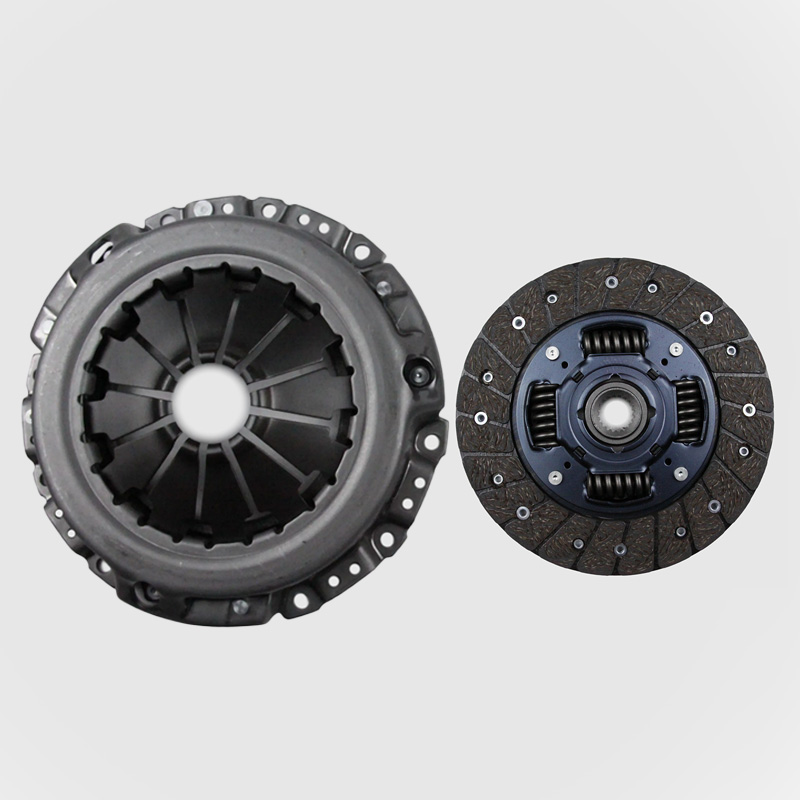
Low cost clutches usually use recycled materials or low grade friction discs instead of high strength sintered metal or ceramic composites. These low-quality materials are easy to erode and deform under high temperature, resulting in:
(1) Slipping phenomenon: reduced power transmission efficiency, weak acceleration
(2) Rapid wear: the service life is only 1/3 of the high-quality clutches, and frequent replacements cost more money
(3) Damage to the flywheel: friction discs shedding debris that may damage the key components of the engine
The friction discs used in our clutches are resistant to high temperatures and abrasion, ensuring stable performance for more than 100,000 kilometres. The friction discs used in our clutches are resistant to high temperature and abrasion, ensuring stable performance over 100,000 km.
5. Cheap metal parts: insufficient strength, easy to deform
Pressure discs and springs of low-priced clutches are usually made of **low-grade steel** instead of high-strength heat-treated alloys.
This will lead to:
(1) Uneven pressure: uneven clutch bonding, strong shifting frustration
(2) Metal fatigue: spring elasticity decreases after long term use, the clutch can not be fully disengaged
(3) Sudden failure: may break in extreme cases, causing potential driving safety hazards
Our pressure plate is made of military grade alloy steel, which is precision heat-treated, to ensure the stability of the clutch under high loads in the long term.
6. Shoddy production process: poor precision and high failure rate
Low-priced clutches often come from small workshop-type factories, and the production process lacks:
(1) Dynamic balance testing: resulting in shaking and rattling at high speeds
(2) Strict tolerance control: poorly matched with the engine, prone to slipping or incomplete disengagement after installation
(3) Insufficient anti-rust treatment: prone to rusting in humid environments, shortening the service life
Our products are laser-calibrated + 100% factory-tested to ensure long-term stability under high loads. Laser calibration + 100% factory test to ensure the precision and reliability of each set of clutches.
7. No after-sales guarantee: save a small amount of money, may spend a lot of money
Low price clutches usually:
(1) No warranty or very short warranty period (e.g., 1-3 months), businessmen tend to pass the buck after the problem
(2) High maintenance cost: repeated dismantling and reassembling due to quality problems, the cost of labour may exceed the price of the clutch itself
(3) Influence on the whole car warranty: non-genuine standard parts may lead to the refusal of the 4S shops to provide relevant warranty services
We provide 1 year warranty, and support the national joint warranty, so that owners have no worries.
8. Hidden ‘cost of use’: seemingly cheaper, but actually more expensive
The real cost of low-priced clutches is much more than the purchase price, but also includes:
✅ Fuel loss (low transmission efficiency, fuel consumption increased by 5-10%)
✅ Maintenance costs (frequent replacement, and associated damage to other parts)
✅ Time costs (many times in the factory repair delayed car)
How to choose a real money-saving clutch? How to choose a real money-saving clutch?
1. Look at the material: prefer sintered metal/ceramic friction plate, high strength alloy pressure plate
2. Look at the technology: choose the brand with dynamic balance testing, precision machining
3. Look at the warranty: at least 1 year warranty, avoid ‘disposable products’
4. Look at the word of mouth: check the reviews of the real users
1. Look at the material: prefer sintered metal/ceramic friction plate, high strength alloy pressure plate
2. Look at the technology: choose the brand with dynamic balance testing, precision machining
3. Look at the warranty: at least 1 year warranty, avoid ‘disposable products’
4. Look at the word of mouth: check the reviews of the real users
Cheap does not mean cost-effective, safety and reliability is the real saving
Low Price Behind the ‘cheap’ clutch is the cost of material shrinkage, poor workmanship and lack of after-sales service. For the clutch such a key transmission components, choose a high durability, high transmission efficiency products, in order to let your car run more smoothly, more fuel-efficient, more secure!
Release time: 2025-04-10
“16-YEAR-OLD FACTORY WARNING: These Clutch Maintenance Mistakes Are Ruining Your Equipment”
Vigilance! These 3 Wrong Ways of Installing a Clutch are Ruining Your Car
Related blog